Social Studies - History - Civics Lessons and Resources
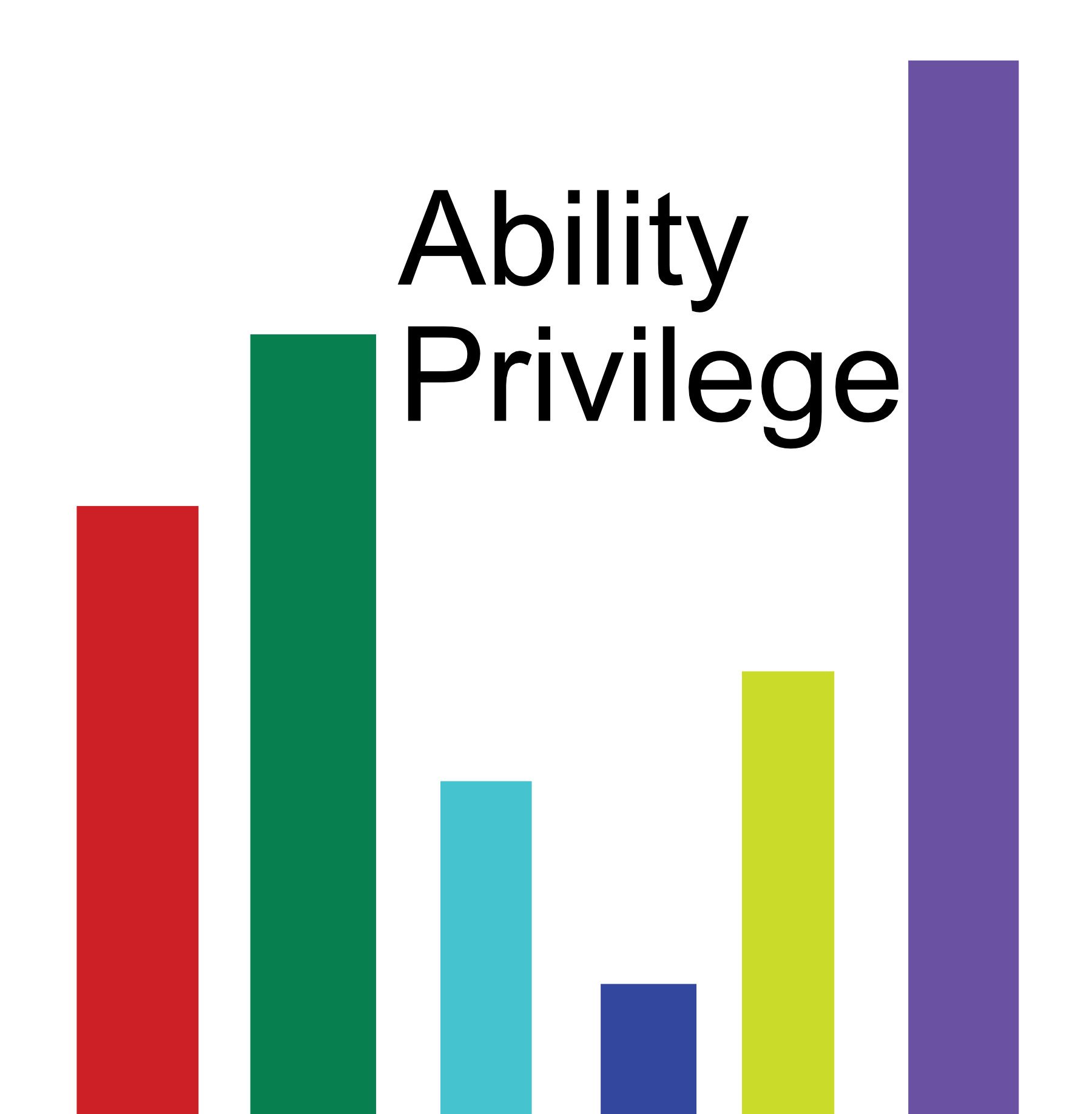
This activity is designed for students to reflect on their own lives and their privilege status. Unfortunately in our society certain groups can navigate with ease, while others must fight for their basic rights. Students will reflect on how their ability (able-bodied or disabled) affects their lives and how they can use their privilege to help others.
Image Description: various heights of different colored bars lined up next to one another. The words “Ability Privilege” towards the top.
This lesson plan is a guide for how you can have a discussion with your students about the history of the ADA and, more specifically, the Capitol Crawl, which was a protest that was successful in urging congress to vote on the ADA. The lessons center around a 9 minute video that tells the story of the Capitol Crawl. There is a worksheet that goes with this lesson.
Image description: photograph of dozens of protesters on the steps of the Capitol building. Some are standing, some in wheelchairs, many are crawling up the steps.
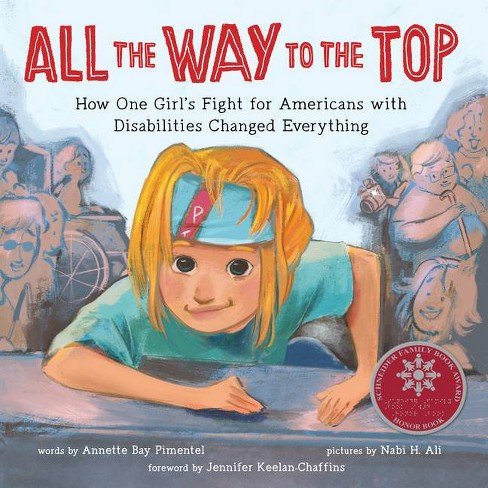
In this lesson students will learn new vocabulary words and explore important civil rights themes by reading the book “All the Way to the Top” by Annette Bay Pimentel. “All the Way to the Top” tells the childhood story of Jennifer Keelan-Chaffins, who climbed all the way to the top of the stairs of the US capitol in 1990 to encourage congress to pass the Americans with Disabilities Act (ADA). Jennifer has cerebral palsy and became famous for the photos taken of her while climbing the stairs without a wheelchair at just 8 years old. The book tells the story from her perspective and covers how she felt she was not treated equally in her community and how she and other activist worked to get the ADA passed.
Image description: Cover artwork for “All the Way to the Top”

By analyzing various primary and secondary sources, students will determine how citizen activism among the disabled community led to passage of the Americans with Disabilities Act (ADA) in 1990. After reviewing ADA provisions that improved access to public facilities and the workplace, students will identify continued areas of need for people with disabilities and develop public service announcements that promote personal responsibility for maintaining accessibility.
Image Description: National History Day logo, “The Americans with Disabilities Act: Taking Action for Access,” and a series of 4 blue and white accessibility symbols arranged in a diamond pattern with “Americans with Disabilities Act” along the top edges.

This lesson details the provisions of the Americans with Disabilities Act signed by President George H.W. Bush. It also looks at the 20th Anniversary speech made by President Barack Obama and his vision for the future of Americans with Disabilities.
Image Description: C-SPAN Classroom logo, “Americans with Disabilities Act” and photo of the signing of the ADA
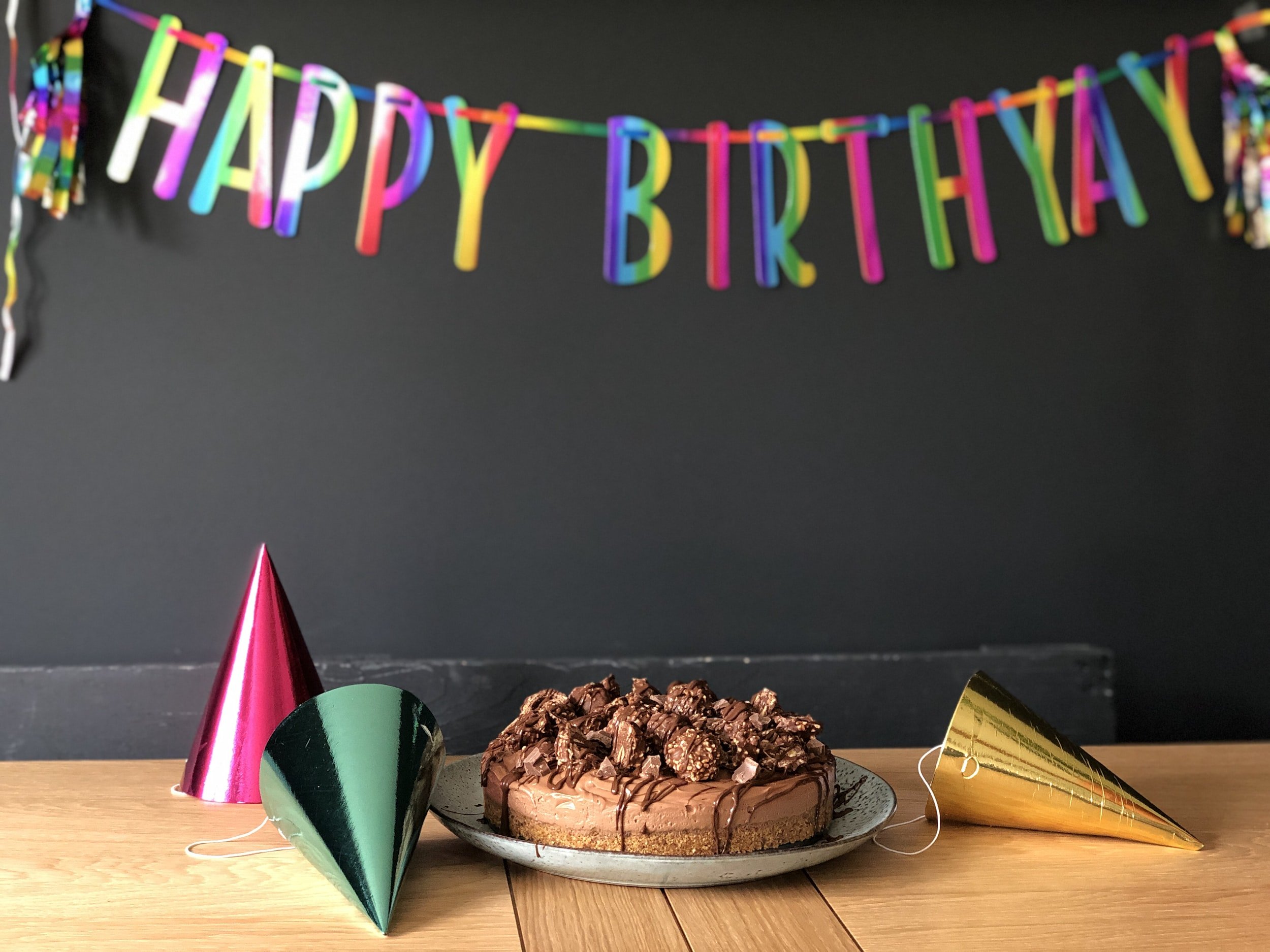
In this lesson, students will consider what accommodations they can make in order to be more inclusive of their peers with disabilities.
Image description: Photo of cake, birthday hats and Happy Birthday banner

Students will select a Black Disabled artist from Leroy Moore’s Black Disabled Art History 101. Students will research their selected artist and their works. Students will choose a piece of artwork created by this artist and analyze it using a critical artistic framework. This lesson can be adapted for a wide range of ages.
Image description: Cover photo of Black Disabled Art History 101
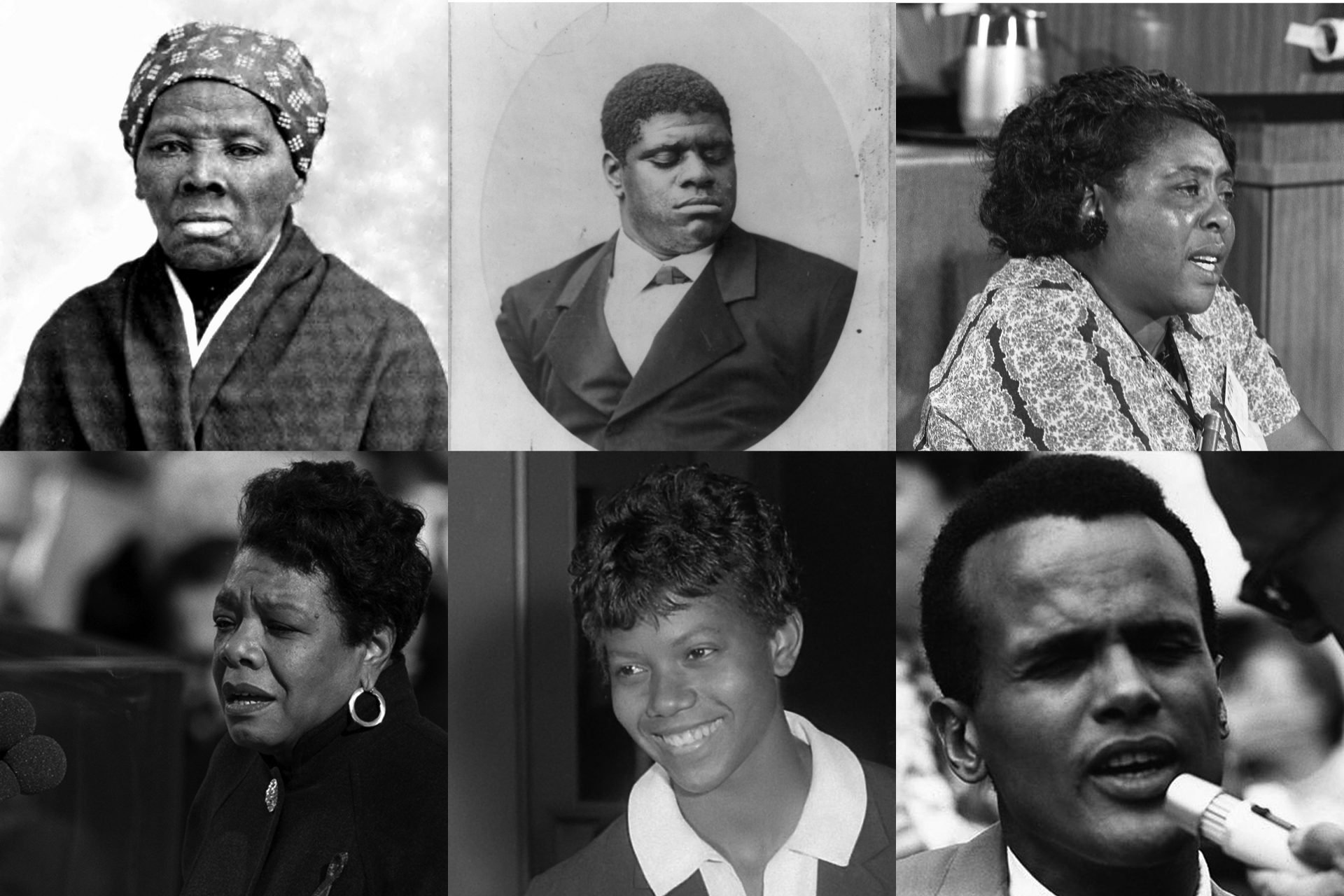
In this lesson, students will be invited to research a famous Black Disabled person, either from history or modern day. Students will work in groups or individually to research their assigned person and create a final project in a creative format. Students will then present their findings to the class.
Image description: Photos of 6 famous Black Disabled people: Harriet Tubman, Tom Wiggans, Fannie Lou Hamer, Maya Angelou, Wilma Rudolph, and Harry Belafonte
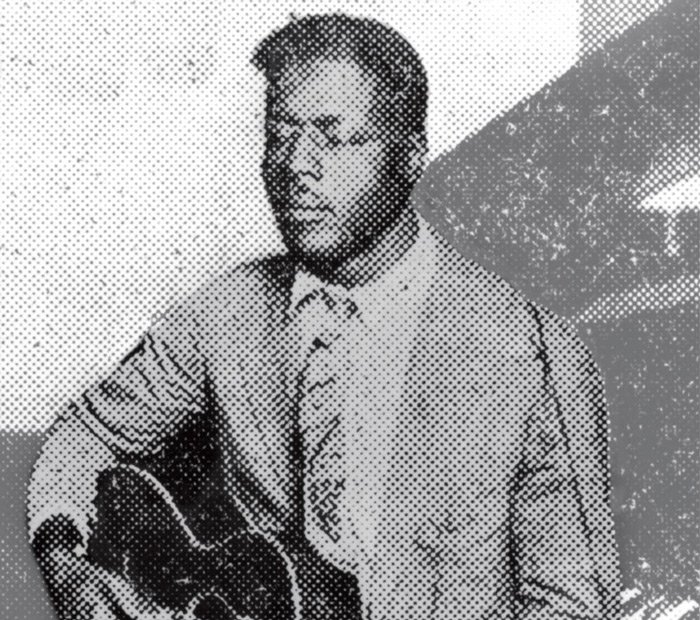
Students will learn about one of the most influential blues guitarists of the early 1900s, Blind Willie Johnson. They will read an article detailing his life and how he is remembered. The class will then listen to an example of his music, and covers of his music. Students will also discuss how blind musicians can help advance the discussion concerning the stigma of disability.
Image description: halftone photograph of Blind Willie Johnson

Students will participate in an exercise and discussion on disability and segregation. In this lesson students will map out social interactions in their everyday lives. After they complete the exercise the teacher will facilitate a discussion on segregation. Students with disabilities who grow up in institutions are effectively segregated from the rest of the population, so their social circles tend to look very different from the students in class. This lesson is split into two class periods.
Image description: Overlapping circles with various disability icons inside each circle

Students will participate in an interactive read-aloud and discussion of the picture book “Come Over to My House” by Eliza Hull and Sally Rippin, exploring its representation of disabilities. They will respond to a writing prompt inspired by the book and create artwork to accompany their writing. The lesson concludes with reflective questions and optional follow-up activities to address student inquiries.
Image Description: Cover of a children's book titled "Come Over to My House." It features a group of children and a dog and 2 adults at an open door. One child is in a wheelchair, another is upside down, and there is a dog sitting in the middle. The children are smiling and appear welcoming.
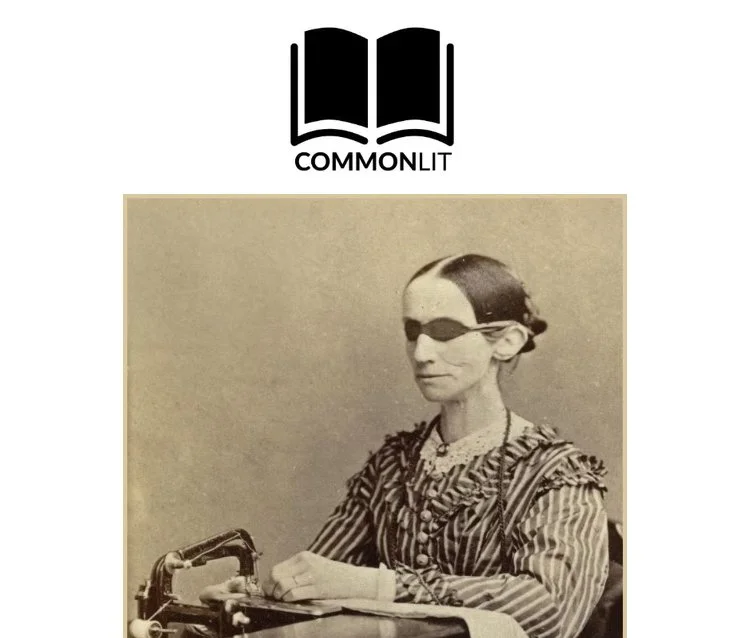
Students read an informational text about Laura Bridgman, the first deaf-blind person to learn to read and write a language, and explore how she developed her own ways of communicating and learning before and after attending the Perkins Institution. Through reading and discussion, students consider how access to education shapes what people are able to do, and what assumptions about disability can get in the way of that access.
Image Description: Logo of CommonLit, which looks like an open book with a sepia tone photo of Laura Bridgman at a sewing machine
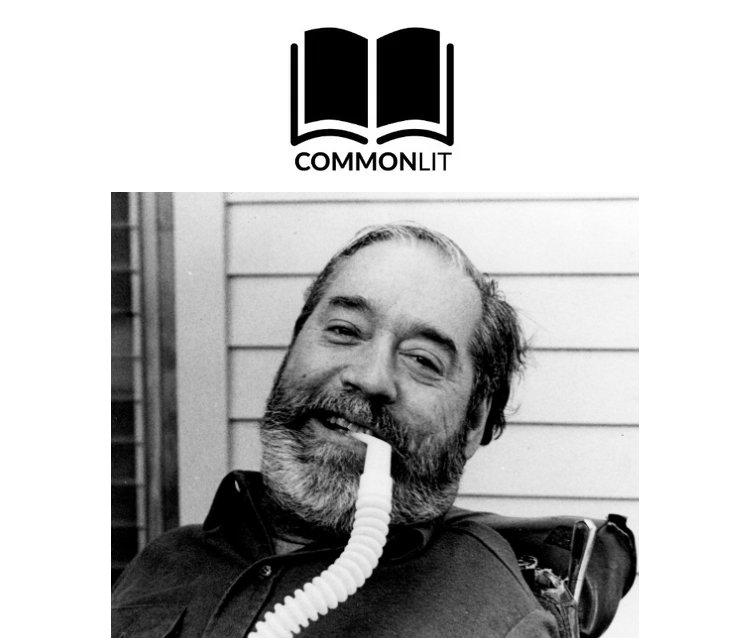
Students read a compilation of speeches by Ed Roberts, a disability rights activist and organizer, and examine how he uses personal narrative, humor, and argument to make the case for disabled people's autonomy, access, and civil rights. Through reading and discussion, students analyze Roberts' rhetorical choices and consider how individuals and communities build power to challenge systemic barriers.
Image Description: Logo of CommonLit, which looks like an open book with a photo of Ed Roberts with his breathing tube in his mouth
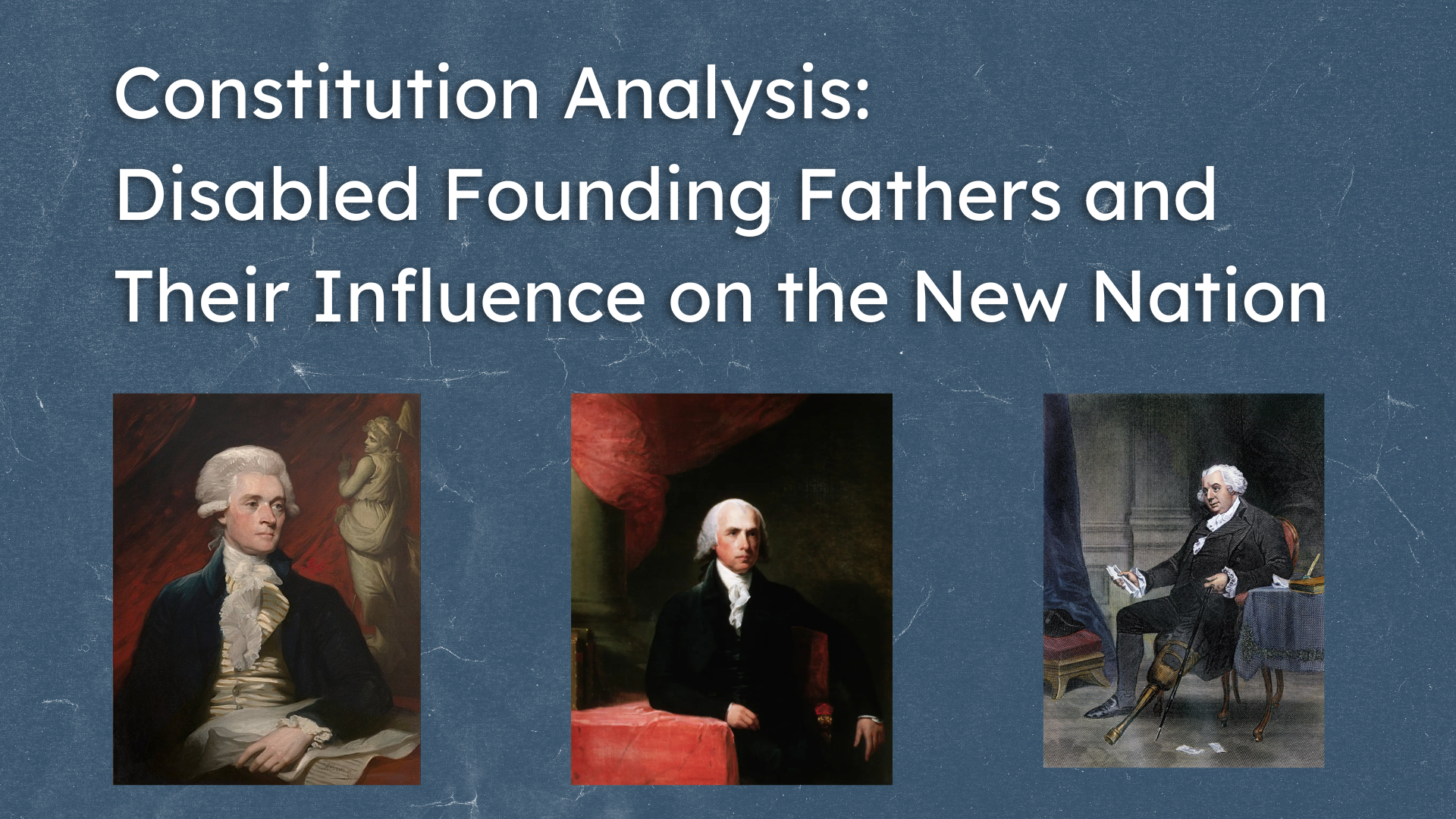
This lesson has students read, analyze, and compare three texts that all originate from the founding of the United States. Each text is primarily penned by a different author, each author a founding father who lived with a disability. This activity has students consider the goals and means of reaching those goals highlighted in each document, while also challenging them to think critically about why the authors’ disabilities are not frequently recognized when studying their lives and impacts. This activity also practices purposeful and guided annotation.
Image Description: Navy background with white letters reading “Constitutional Analysis: Disabled Founding Fathers and Their Influence on the New Nation” with pictures of James Madison, Thomas Jefferson and Gouverneur Morris

In this collection of lesson plan, students will learn about media literacy and apply those skills to the media created for the film CRIP CAMP; will explore the concepts of power and justice, and how they relate to disability rights and disability justice; will explore the concepts of power, civil rights, and human rights, and how these concepts relate to disability rights, and then apply those skills to the media created for the film CRIP CAMP; will understand how language is connected to power and ableism; and discuss how the strategic use of power helped the disability rights movement in the US evolve.
Image Description: “Crip Camp Curriculum” in white text on green background

Summary:
In this lesson, students will look at four different characterizations of autistic children in contemporary media. They will watch excerpts or videos featuring the characters, read about the characters, and study how they were created. They will then fill out an evaluation chart to analyze the different depictions. They will have a group discussion as a class and write a reflective response.
Issues considered will include: character’s role within the show/movie; who was involved in writing/creating the characters; what public response has been; and so on. The lesson will conclude with a group discussion and students will complete a journal-style piece of writing as an exit ticket.
The characters that the students will learn about are:
Julia from the television show Sesame Street;
Pablo from the television show Pablo;
the main character from a Pixar short called Loop;
Carl, from the show Carl the Collector.
Image Description: Upper left quadrant is Julia, a muppet with yellow skin and orange hair. Upper right quadrant shows the main character from Loop, a girl with brown skin and dark hair who is reaching with her hands to touch reeds. Bottom left quadrant shows Pablo, a hand-drawn boy with light skin standing on a green hill with a rainbow behind him. Bottom right quadrant shows Carl, an illustrated raccoon wearing an argyle sweater.

This unit focuses on the historical event that caused a ripple in the Deaf community, Deaf President Now. The unit includes three lessons, three projects, and a lot of fun!
Image Description: Black and white photo of students holding a banner that says “Deaf Prez Now!”.

Students will be introduced to two important events in US history – the Kent State Massacre and Deaf President Now protest. They will be exposed to the events that occurred on the two college campuses and their outcomes. They will read the First Amendment and be presented with information to assist them in drawing conclusions about whether these were peaceful protests. They will obtain information to assist them in comparing and contrasting the two events. As the culminating activity, students will create a storyboard about May 4, 1970 at Kent State.
* NOTE: This lesson could be taught during Deaf Awareness week and the following week ‐‐ could encompass ASL, history and ELA classes.
Image Description: Colorful painting depicting a protest scene in front of a domed building. In the foreground, several figures are holding a large sign that reads "DEAF PRESIDENT NOW" in red letters. There are also several flags in vibrant colors, including red, blue, and yellow, being waved by the crowd.
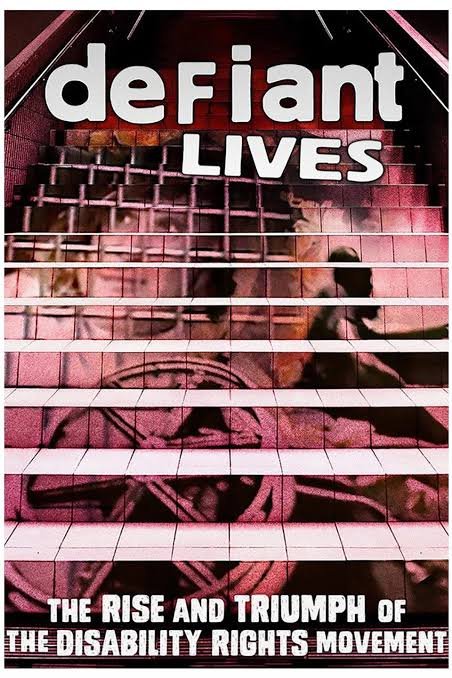
Students will watch “Defiant Lives: The Rise and Triumph of the Disability Rights Movement in the United States, England, and Australia.” It covers important milestones in disability activism, from breaking people out of nursing homes to advocating for equal rights. The discussion topics in the film vary from institutionalization to passing legislation. The film highlights in particular, the vast differences between the medical model of disability and the social model of disability. For 5 days, students will watch a segment of the film and record their own thoughts and then discuss their thoughts with a partner and the full group. The last two days students will work together to create their own plan to address an issue in their own community.
Image description: Defiant Lives poster showing stairs and projected onto the stairs is a pink and black wheelchair and disability activist. Text at the top says Defiant Lives and text at the bottom says the Rise and Triumph of the Disability Rights Movement

In this lesson students will compare and contrast 3 videos on Pennhurst State School. Students will delve into two narratives, The “horror” and “historical”. In a class discussion, students will discuss the implications of each narrative on how society views mental illness and intellectual disability. Students will learn about Pennhurst and the historic self-advocacy of the residents and the eventual closing of the PA institution.
Image description: Black and white photograph of Pennhurst

As our friends from Engaging America state, “Primary sources … can provide entry points and deepen exploration into historical events. Primary sources add immediacy, such as the faces in a photograph, the emotional tone of a drawing or song, or the complex look of a handwritten document. Documents from multiple points of view can illuminate conflicting ideas and events. Varied media, including maps, oral histories, published reports, and graphs offer many options for connection and investigation”.
We share these collections or primary sources as tools to continue introducing disability into the conversation from natural perspectives, using disabled people to tell their own stories whenever possible.
Image Description: Article from Dallas Times Herald, Wednesday, January 14, 1986 in section “Community Close-Up” titled “Police on sidewalk wheelchair ramps changed”
Full image description can be found at: https://adaptmuseum.net/gallery/picture.php?/451/category/16

This lesson is meant to accompany Disability Equality in Education’s Disability History Timeline. Printable images are included in the materials to use with this lesson. In this lesson, students will select a moment from disability history and analyze its importance.
Image description: tiles from DEE”s Disability History Timeline on the wall

In this lesson plan, you’ll find six modules that you can mix and match, that all teach about different aspects of disability rights and disability justice.
Image Description: Education Amplifier’s illustration of Lydia X.Z. Brown
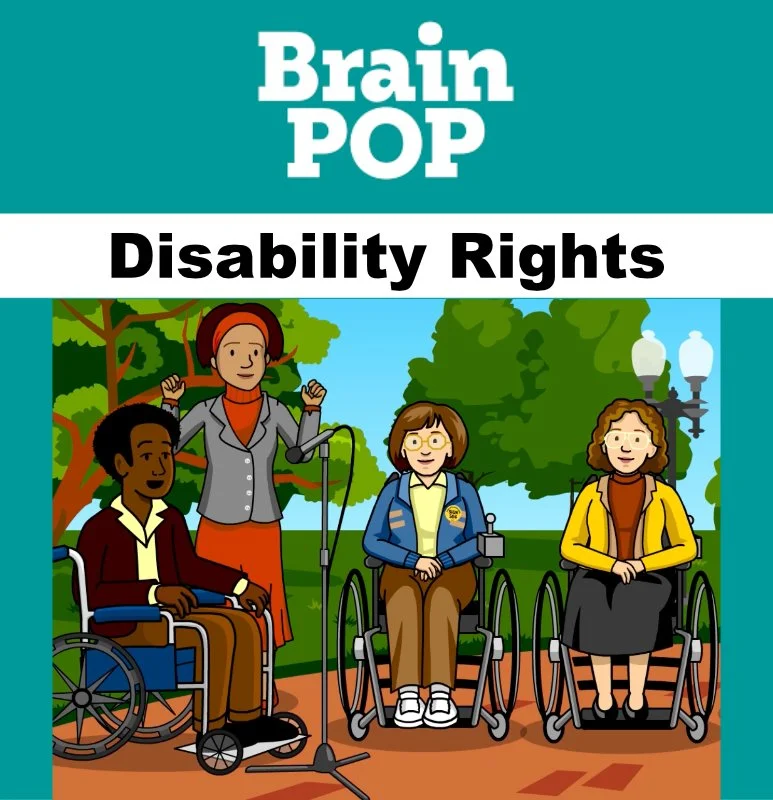
This BrainPop video and associated resources introduce the Disability Rights movement through the fight for Section 504, the law that paved the way for the Americans with Disabilities Act.
Image Description: BrainPOP logo, “Disability Rights” and animated screenshot from the video showing 4 people outdoors, 3 are seated in wheelchairs, one is standing in front of a microphone.

Through reading selections of the United Nations Convention on the Rights of Persons with Disabilities (CRPD), students will explore the role of international agreements in shaping national policies. They will engage with key human rights vocabulary, analyze how the CRPD has influenced disability rights worldwide, and explore issues pertaining to US non-ratification. This lesson encourages critical thinking about disability as a civic and human rights issue, emphasizing the responsibilities of governments in upholding equality and justice. Differentiation strategies for middle vs high school students would include using the original vs easy-read version of the text, as well as differentiated discussion questions.
Image Description: Left, United Nations emblem consisting of a world map surrounded by two olive branches, all in white on a blue background. Right, CRPD logo, each letter on its own in white on a maroon square arranged in a 2×2 grid. To the right are the words “Convention on the Rights of Persons with Disabilities” in maroon.

Summary:
An introduction helps establish safe and respectful study of disability history. In lesson 1, students the Question Formulation Technique helps develop questions. Then a presentation highlights disabled advocates across American history. In lesson 2, students research the causes, goals and methods, successes and setbacks of the Disability Rights Movement. Students present research with multiple media options: talk with slides, podcast, video, essay, or poster. Lesson 4 guides a genuinely inclusive civic engagement project.
Image Description: Emerging America logo above text that reads “Grades 9-12: The Long Struggle for Disability Rights” above a black and white photo of ADAPT protesters seated on the ground and in wheelchairs holding signs c. 1980s

Summary:
An introduction to disability helps establish safe and respectful study of a difficult topic. Students examine eugenics policy, including forced sterilization and examine how values change. Primary sources include challenges to eugenics from the 1930s as well as 21st century efforts to come to terms with its impacts. The grades 4-5 lesson 2 on immigration policy can provides primary sources and guiding questions that can provide solid support to expand this unit. Unit resources support optional research projects.
The material is emotionally difficult. It is essential to create a safe space for all, including students who might relate personally to the topic. Particular attention is required to ensure that discussion respects students of varied views. It is vital to clarify that universal norms of democracy today are clear that there is no valid justification for the program of eugenics and that its claims were in no way supported by valid science.
Image Description: Emerging America logo above text that reads “Grades 9-12: Disability in the Progressive Era” above a black and white photo of William H. Taft, Oliver Wendell Holmes, Jr. and others in front of the White House. c.1922

Summary:
All the grades 8-10 units begin with a brief introduction to the topic. Lessons 1 & 2 could anchor study of the Second Great Awakening and other reforms of the period or integrate within a larger unit. Lesson 2 introduces some of the problems with larger-scale institutionalization and thus could provide a foundation for further study of the exposés and struggles for independent living throughout the 20th century.
Image Description: Emerging America logo above text that reads “Grades 8-10: How Civil War Veterans Transformed Disability” above a black and white photo of the Wounded from the Battle of the Wilderness c. 1864

Summary:
All the grades 8-10 units begin with a brief introduction to the topic. Lessons 1 & 2 could anchor study of the Second Great Awakening and other reforms of the period or integrate within a larger unit. Lesson 2 introduces some of the problems with larger-scale institutionalization and thus could provide a foundation for further study of the exposés and struggles for independent living throughout the 20th century.
Image Description: Emerging America logo above text that reads “Grades 8-10: Founding of Schools and Asylums” above a sepia-toned lithograph of the American School for the Deaf c. 1881

Summary:
This unit works particularly well in a course on civics and government. The intro lesson introduces key information and can be useful to check student knowledge and experiences. Lesson 1 is essential to introduce the unit's study of disability. Lessons 2 & 3 delves into work for disability rights, including transformative legislation. In lesson 4, students apply what they have learned about civic action to research, plan, and carry out their own civic engagement project. (This lesson is also used for Grades 9-12.) Lesson 5 can stand alone or fit within the unit; it adds disability rights as an option for study of historic Supreme Court cases.
Image Description: Emerging America logo above text that reads “Grades 6-8: Disability, Civic Engagement, and Government” above a black and white photo of an ADAPT Protest c. 1990